*The African Civilizations the World Rarely Teaches*
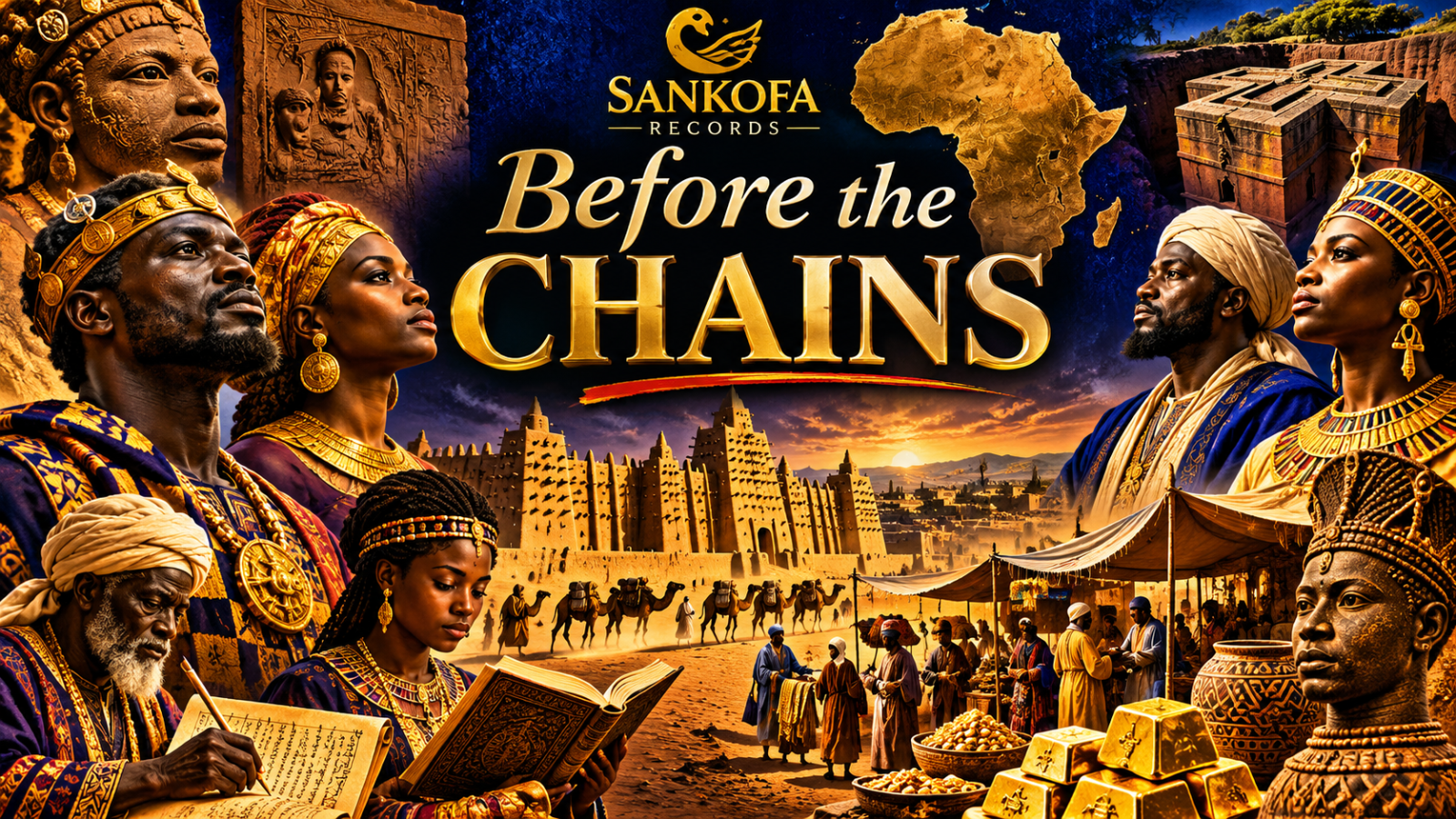
Before the slave ships crossed the Atlantic, before European merchants began transporting millions of captive Africans across the ocean, before laws reduced human beings to property, Africa had already witnessed thousands of years of civilization.
Kings and queens governed powerful kingdoms. Scholars studied mathematics, astronomy, religion, and law. Architects raised monumental structures. Farmers cultivated crops, metalworkers mastered iron, and merchants connected communities across deserts and seas.
Africa was not waiting for outsiders to introduce civilization.
It had civilizations of its own.
And their histories deserve to be told on their own terms.
## The Kingdom of Kush: A Power on the Nile
Long before the Atlantic slave trade, the Kingdom of Kush flourished in what is now Sudan.
Kushite rulers controlled territories along the Nile, developed centers of trade and religious life, and eventually conquered Egypt, establishing its Twenty-Fifth Dynasty during the eighth century BCE.
The Kushites were not simply imitators of Egypt. Their civilization had its own political traditions, artistic achievements, religious practices, and royal institutions.
At Meroë, the remains of pyramids, temples, and settlements still testify to the power of a civilization whose history is too often overshadowed.
## Timbuktu: Where Knowledge Was Wealth
Centuries later, in West Africa, the city of Timbuktu became a center of scholarship, religion, and commerce.
During the fifteenth and sixteenth centuries, students and scholars gathered around its mosques and centers of
learning. Manuscripts were copied, studied, traded, and preserved.
Gold and salt moved along commercial routes connecting West Africa to North Africa. Books and ideas traveled alongside them.
Timbuktu was not an isolated settlement. It belonged to a wider world of intellectual and economic exchange.
## Great Zimbabwe: The Walls That Challenged a False Narrative
In southern Africa, builders constructed enormous stone walls without mortar.
Great Zimbabwe developed into an influential political and commercial center between the eleventh and fifteenth centuries. Its people cultivated crops, raised livestock, worked metals, and participated in trade networks reaching the Indian Ocean.
When European colonizers encountered its ruins, some refused to believe Africans had built them. Archaeological research eventually established their African origins.
The buildings themselves survived. What had to be dismantled was the prejudice surrounding their interpretation.
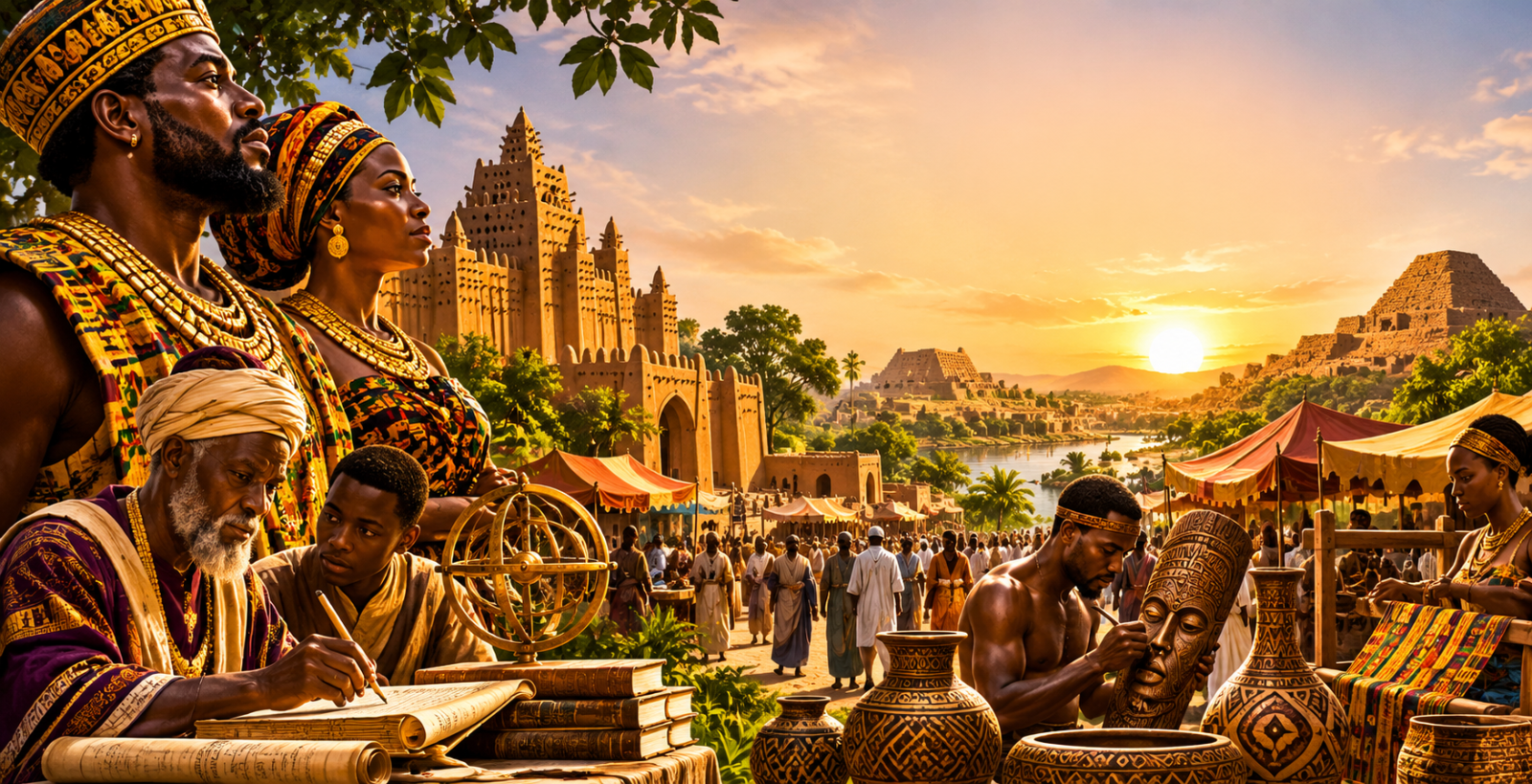
## What Was Here Before the Chains?
These civilizations did not represent one unified African society. They existed in different regions and centuries, spoke different languages, practiced different religions, and experienced their own conflicts and inequalities.
Their importance is not that Africa possessed a flawless past.
Their importance is that Africa possessed a vast, complicated, documented history long before the Atlantic slave trade.
**Enslavement became part of African history. It was never the beginning of African history.**
That is where Sankofa Records begins its work: recovering the documented record, confronting what was distorted, and allowing the evidence to speak.
Comments
No comments yet.
Sign in or join to comment.